

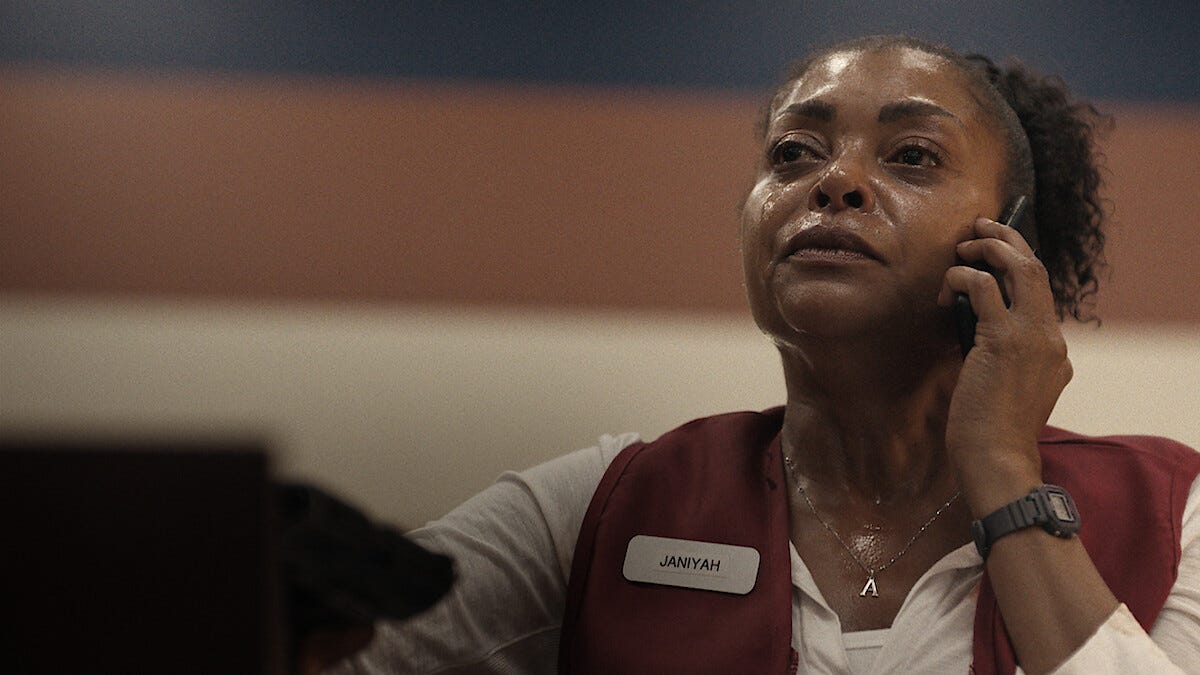
Straw was not the type of film one finishes and walks away from with a simple shrug or laugh. I sat for hours, thinking, not because the acting was poor. No, the performance was indeed gripping with faces that were familiar, and voices that were believable, because the pain felt close to home. Yet, something deeper disturbed me. Something that has troubled for far too long, and Tyler Perry has refused to confront it with honesty. Tyler Perry owes the black woman far more than this recycled suffering.

Tyler Perry has done well for himself in the business of storytelling, but sometimes success becomes dangerous when nobody around you can say, “Oga, this thing you are doing is becoming a problem.” His new film, Straw, follows a pattern that many of us are no longer willing to pretend we don’t see. It is the same pot of trauma stew, stirred with tears, garnished with madness, and served with a side of loud black pain. It is the same old performance: a black woman is torn apart by betrayal, loneliness, and mental pressure until she collapses into violence. We have seen this film too many times, dressed in different clothes. The acting may have improved, the production value may look richer, but the story is the same cloth sewn into different styles. From “The Haves and Have not” to “Diary of a Mad Black Woman” to “Acrimony,” to “The Family That Preys,” to “A Fall From Grace,” and now “Straw,” what we see is not a black woman rising but a black woman breaking, exploding, then collapsing. The story ends, not in healing, but in spectacle. The only difference now is that instead of Madea’s slapstick comedy, Perry is using tears and guns to entertain the crowd.

This is not an attack on Tyler Perry’s intentions. Perhaps he believes he is doing the work of advocacy. Perhaps he believes the world must first witness our pain before it can understand our strength. Perhaps he means well. However, in life, meaning well is not the same as doing well. It has become increasingly obvious that Tyler Perry has carved a profitable niche for himself in the business of black female suffering. Whether it is the African American woman in his dramas, the loud aunt in a wig shouting in a kitchen, or the quiet woman on the verge of breaking down, the formula is the same… strip her down, break her spirit, crush her with betrayal, and then let her rise either through vengeance or madness. That method is not just outdated, but irresponsibly stale. The black woman is not a ticking time bomb, or a museum of trauma. She is not a dramatic prop for tearful cinema. She is a whole human being with far more to offer than crying on screen.
The acting in Straw was excellent, and it is important to give credit where it is due. Teyana Taylor carried her role with heavy shoulders and eyes that spoke even before her mouth moved. Taraji P. Henson, as always, gave a performance rooted in experience and we felt every tear and pain as bled on screen. Sherri Shepherd also brought life to her character with the kind of honesty that cannot be taught. No one is questioning their craft, because it was incredible. What must be questioned is the story itself. Why must it always begin and end with pain? What is the point of carrying so much pain to the audience without also carrying some light? Why must the black woman always reach her peak when she has nothing left… no joy, no sanity, no peace, just rage and destruction? Why must the black woman in Perry’s universe always lose a child, a home, a man, or her mind? Why is the only way to show her strength through destruction? At what point will Perry realise that repetition is not creativity? There is a difference between telling hard truths and feeding a stereotype. We have crossed that line.

Tyler Perry has now become too comfortable feeding audiences with the same formula: break her spirit, show her madness, insert God at the end, and let the credits roll. I don’t think that is empowerment, but emotional punishment. It is trauma monetised.
There are women all over the world who go through the furnace of life. White women, Asian women, Arab women, because suffering is not peculiar to race. What is peculiar is the lens through which it is portrayed. One does not have to go far. A simple series like “The Maid” on Netflix told the story of a white single mother struggling with an abusive partner, poverty, rejection, and mentally unstable mother, while trying to raise her child alone. Her pain was real, yet there was no pointing a gun at society, or madness. There was no need to make her a monster before showing her pain. She cleaned houses, wrote her stories gathered from cleaning houses, and fought to get into the university as a single mother through the application of student loan. She cried, yes, but she also moved forward and grew. That is how to tell a painful story with honour. That is how you inspire people who are going through the same thing. It is not by shouting, shooting, or collapsing every ten minutes in the name of drama. Real life is already difficult already. So, people need direction and not disaster. That is what the black woman deserves too, and not the constant reinforcement of the image of a loud, bitter, violent woman who explodes when the world refuses to love her.
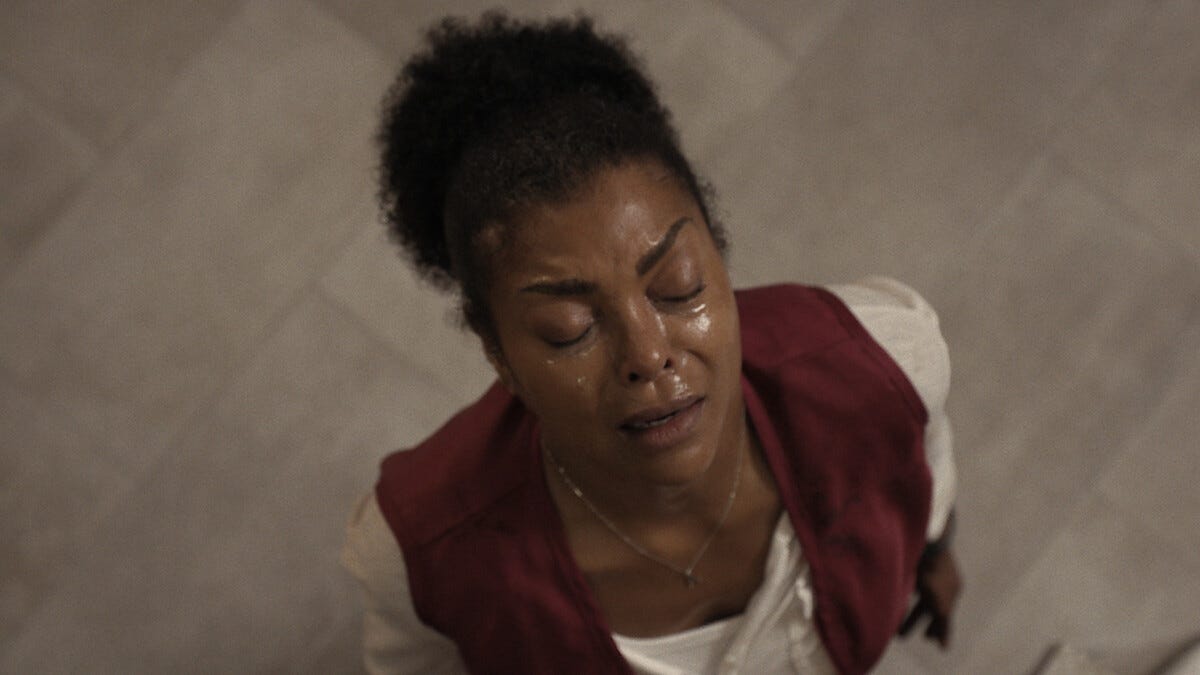
In Straw, what one sees is not a woman seeking healing, but a woman who has concluded that her pain is enough reason to punish the world. Her trauma is now a licence to hurt. Her hurt becomes a religion. Her weapon becomes her voice. She enters a bank, not with a dream, but with a gun. That is not strength, power, or resistance. It is simply pain that has fermented into destruction. The message being sent is dangerous. That when life wounds you as a black woman, you must scream until walls fall. That healing comes from collapsing everything around you. That is a fat lie. That is not the legacy of black womanhood. That is not how our mothers survived slavery, colonialism, domestic violence, or abandonment. They held their pain like fire in the belly and raised nations from ashes. They found God, found therapy and found purpose. They did not hold rooms hostage. Instead, they held themselves.
We must ask ourselves an honest question: what are we feeding the next generation of black girls when every time they see themselves on screen, they are broken, bitter, betrayed, or ballistic? Are we teaching them that healing is not possible? That strength can only come after total madness? That carrying trauma is a badge of honour? That therapy is a joke and violence is the only way to be heard? These are not small things, because images shape culture, memory, and shape what a little girl believes is her destiny. You cannot plant poison and expect honey to grow. Perry may not realise it, but he is not just entertaining people, he is archiving pain as our permanent identity.
There are millions of black women raising children with no help. Black women bury their children and return to work on Monday. They are building businesses, leading governments, surviving betrayal, and healing from rape, incest, rejection and poverty. Yet, they carry it with dignity. They are not perfect, but they are powerful. The world deserves to see those stories too. If Tyler Perry truly wants to honour black women, he must tell the full story, and not just the collapse, but the recovery. Not just the betrayal, but the forgiveness. Not just the madness, but the wisdom. We are not only women who scream. We are women who think, pray, build, lead and love. Our strength is not only in noise. There is also power in our silence and victory in our stillness.
Pain is not a black woman’s identity. It is part of her journey, yes, but it is not her name. She is neither defined by it, nor does she wear it as a crown. She is not special because she suffers, but she is special because she survives. In surviving, she does not need to destroy the world to prove a point. What Tyler Perry has done over the years is freeze the image of the black woman in mid collapse. He gives her permission to cry, but rarely gives her room to recover. That is not love or loyalty, but spectacle, theatre of trauma, and the ticket has become too expensive to justify.
It is time for Tyler Perry to change direction. Enough of using black trauma as creative fuel. Enough of turning every black woman into a victim of emotional explosion. If you truly love black women, evolve and write them better. Stretch your pen beyond madness and misery. Show their joy, their success, their peace, their love stories that don’t end in madness. Show her winning without first breaking. I mean…we are not asking you to lie. We are only asking you to see us as more than walking tragedies. Write about a black woman who is not angry, crazy, weeping, or lost. Just powerful, brilliant, and free.
We are more than pain. We are not ticking time bombs. We are builders of nations, keepers of homes, teachers, thinkers, survivors, and visionaries. The black woman is not a straw about to break. She is steel. She is soil. She is river. She is fire. She is spirit. She is soft and strong at the same time. She is what the world cannot define in a single word, and she deserves stories that carry her full identity, not just her wounds.
The time has come to stop turning her into a shadow of herself just to sell tickets. If Tyler Perry wants to honour her, then he must write her fully, deeply, truthfully.
Enough of the broken shadows.
By: ILUOOGHENE DePOET
Lawyer | Writer | Speaker | Pan-African